
By: John Benjamin Last updated: 12/11/2025
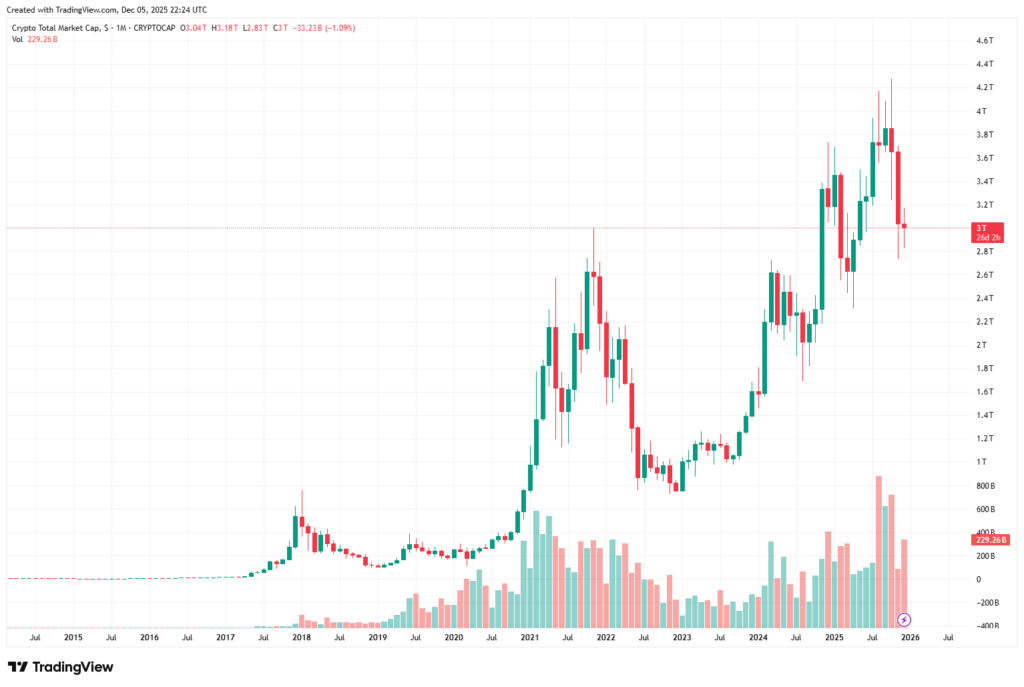
Crypto has been around for a while and continues to grow, with more money invested each year. CoinGecko reports that the market went from $1.6 billion in 2013 to $4 trillion in 2025, then dropped to about $3 trillion later that year. Like many people, I wanted to understand how the cryptocurrency market works and whether it’s a good investment given its growth over the years. So, I started by learning the basics. While crypto can seem complicated, it’s possible to understand if you take the time to learn. In this post, I’ll share some important things new investors should know.
What is Cryptocurrency
One of the first questions new investors have when exploring the cryptocurrency market is “What is Cryptocurrency?” Given the numerous definitions of cryptocurrency, I can understand why many people are confused by them. Some major financial players view crypto as a store of value, while others view it as a currency. Let’s look at a few definitions from major players and traditional sources.
- Merriam-Webster has Cryptocurrency defined as “any form of currency that only exists digitally and relies on cryptography.
- Investopedia has the definition as “a digital or virtual currency secured by cryptography, which makes it nearly impossible to counterfeit or double-spend.
- Coinbase website states, “cryptocurrency is typically decentralized digital money designed to be used over the internet.”
- com has the definition as ‘a digital or virtual currency in which all peer-to-peer (P2P) transactions are verified and recorded using cryptography, making it very difficult to counterfeit or hack.’
- The IRS doesn’t have a definition of Cryptocurrency on its website, but it does have a definition of digital assets. The IRS website defines digital assets as “For U.S. tax purposes, digital assets are considered property, not currency. A digital asset is stored electronically and can be bought, sold, owned, transferred or traded. The tax definition of a digital asset is any digital representation of value recorded on a cryptographically secured, distributed ledger (blockchain) or similar technology.”
- Congressional Act H.R. 3633 Digital Asset Market Clarity Act of 2025 defines digital assets as “any digital representation of value which is recorded on a cryptographically-secured distributed ledger or other similar technology.”.
Even though the definitions vary, they share some common themes. Cryptography comes up often, as does the idea of digital assets. Overall, most major organizations and regulators see cryptocurrency more as a digital asset than as a currency.
What is cryptography
Given that cryptography is a major theme in the definitions, we need to understand what it is to fully grasp cryptocurrency. Panos Louridas, a professor of computer science & mathematics, defines Cryptography as the art of encoding and decoding secrets in his article titled “A History of Cryptography From the Spartans to the FBI,” published in The MIT Press Reader. That characterization is an excellent foundational building block. A more applicable definition of Cryptography from Coinbase, which states, “Cryptography is the study and practice of sending secure, encrypted messages or data between two or more parties. The sender ‘encrypts’ the message, which obscures its content to a third party, and the receiver ‘decrypts’ the message, making it legible again.“
A natural next question for many people is: How are the messages encrypted & decrypted? The answer to that question involves using cryptographic methods, also known as cryptography techniques. Below is a table of some of the most well-known techniques and how they are used in cryptocurrency.
Cryptographic Method | Use in Cryptocurrency |
Hash Functions | Block hashing, proof-of-work mining, address generation, transaction integrity |
Elliptic Curve Cryptography (ECC) | Creation of public/private keys, digital signatures, wallet addresses |
Digital Signatures | Signing transactions for authentication and non-repudiation |
Symmetric Encryption | Protecting private keys in wallets, encrypting local data and communications |
Proof of Work (PoW) | Consensus mechanism, secures blockchain by requiring computational effort |
Zero-Knowledge Proofs (ZKPs) | Privacy features: hiding sender, receiver, and transaction amounts while maintaining validity |
Key Derivation Functions | Converting mnemonic seed phrases into private keys; creating hierarchical deterministic (HD) wallets |
Verifiable Random Functions (VRFs) | Random selection in proof-of-stake consensus |
As you can see, cryptography is used at almost every step in the cryptocurrency lifecycle. Each cryptographic method is an algorithm or mathematical equation used to encrypt & decrypt data at various stages, whether you’re starting from scratch, creating a new digital asset, mining/processing transactions, or transacting with a digital asset.
Transaction processing
Digital asset transaction processing involves mining and/or verifying, both of which are vital parts of the cryptocurrency puzzle. Coinbase describes mining as “the process that Bitcoin and several other cryptocurrencies use to generate new coins and verify new transactions.”The article goes on to say that miners verify and secure blockchains and, as a reward for maintaining them, receive coins.
Daskalakis & Georgitseas offer a broad but foundational description of what miners do in their book An Introduction to Cryptocurrencies: The Crypto Market Ecosystem. “Miners use specific hardware and software to perform cryptographic calculations, so as to unlock the computational challenges and solve complex algorithms generated by the blockchain system” (Daskalakis & Georgitseas, 2020, p. [25]).
As you can see, mining is one of those puzzle pieces that connects to a bunch of others. To reiterate what was just said, mining generates new coins and verifies new transactions, giving rewards (In the form of more coins (New Coin & Fees)) using cryptographic calculations to solve algorithms created by the blockchain. The bottom line is that all cryptocurrency transactions have to be verified. POW (Proof of Work) and POS (Proof of Stake) are the main verification methods.
Participants | Miners | Validators |
Validation Method | Solve cryptographic puzzles through computational work | Value and Amount of time holding cryptocurrency as collateral. |
Hardware Required | Specialized equipment (ASIC, GPU, CPU, Mining Pools, Solo mining, cloud mining) | Regular computers |
Energy Consumption | Very high (830 kWh per transaction for Bitcoin) | Very low (0.000008-50 kWh per transaction) |
Security Mechanism | Computational difficulty and cost | Economic stake and slashing penalties |
Rewards | Block rewards + transaction fees | Transaction fees + staking interest |
Blockchain
The process of combining cryptographic methods to encrypt & decrypt data while maintaining a secure record of the data creates a blockchain. The National Institute of Standards and Technology defines a blockchain as “a collaborative, tamper-resistant ledger that maintains transactional records” (https://www.nist.gov/blockchain). The name blockchain comes from how data is stored and secured in blocks. Each block connects to the previous and all future blocks by replicating its data across them, forming a chain.
A crucial fact to note is that each of these blocks is encrypted and decrypted using cryptography, thereby ensuring the security of data on the blockchain. If someone or something were to try to alter a blockchain’s data or hack the network, the attempt would be detected because the data would not match up with data on all the other blocks. The data mismatch would be visible to the blockchain network. The blockchain network would then reject transactions through its consensus mechanism.
To put all this information into perspective and make it more digestible. Here is a great description of what a blockchain network is. “The blockchain network is then a digital platform, which uses cryptographic methods for the storage of information, which cannot be falsified or reversed, and where the entire history of the transactions among the users of the network is recorded, validated, stored, and publicly available’ (Daskalakis, Nikos, and Panagiotis Georgitseas. 2020).
How the Crypto Market Works
Before cryptocurrency is distributed to the public during an ICO (Initial Coin Offering) or as rewards for transaction processing, a decision must be made regarding which type of blockchain will be used. Will the currency be added to an existing blockchain, or will a new blockchain be created? When a new blockchain is created, the cryptocurrency is considered a coin, and when a currency is added to an existing blockchain, it is referred to as a token.
Once the cryptocurrency is distributed and listed on one of the exchanges (Binance, Coinbase, Kraken) for trading, investors can buy and sell the crypto. At this point, crypto can also be used to complete transactions like any other currency, and the market structure for crypto is similar to that of any other electronically traded asset (stocks and bonds).
Crypto Markets and products
There are three main types of crypto markets: spot, derivatives, and OTC.
The spot market is where retail investors trade (buy & sell) crypto at the current price (on the spot). If you wanted to buy or sell cryptocurrency at this very moment, you would be dealing in the spot market to make that transaction.
The derivatives market is where you buy and sell products derived from other assets, like options, futures, forwards, and swaps. The key thing here is that, in the derivatives market, the products you deal in (buy and sell) are priced based on another asset. So, for example, Bitcoin options prices are based on Bitcoin prices and future expectations.
Stablecoins are a type of crypto asset whose price is pegged to an underlying asset. An article by Investopedia, “There are four primary types of stablecoins: fiat-collateralized, commodity-backed, crypto-collateralized, and algorithmic.” There are stablecoins pegged to the U.S. dollar, gold, and other stable, less volatile assets. The idea behind stablecoins is to create a crypto product with reduced volatility compared to the crypto market and to make the price of the coins/tokens more stable.
The OTC market is where institutional investors buy and sell large volumes of digital assets in private transactions. The typical trade terms are agreed upon over email. OTC transactions occur away from the published market, either through an OTC exchange or a broker-dealer that offers cryptocurrency or digital assets products and services.
Your Crypto Wallets
Another extremely important component of crypto is wallets. Whether you’re trading or using crypto to make transactions, you will need a wallet. There are multiple wallet variations that all seem to perform the same function.
When you set up a new cryptocurrency wallet, a pair of cryptographic keys is generated: a public key and a private key. The public key is used to receive funds, identifies your account on the network, and is visible to everyone, while the private key is used only to sign transactions and prove ownership of the associated public key. Your cryptocurrency holdings actually live on the blockchain but can only be accessed using your private key, which proves your ownership of your digital money and allows you to make transactions.
Wallets come in several forms:
- Hot Wallets: Always connected to the internet
- Cold Wallets: Store private keys offline
- Hardware Wallets: Physical devices, often resembling a USB drive, designed to store cryptocurrencies offline securely
- Software Wallets: Applications installed on your computer or mobile phone that interact with the blockchain, allowing you to send, receive, and manage your crypto assets
- Paper Wallets: A piece of paper with your private and public keys printed out, sometimes with a scannable barcode created by an app
Wallets can also be categorized as:
- Custodial: A third party (usually a crypto exchange) is responsible for managing your private keys
- Non-Custodial: You are responsible for storing and managing your own private keys
Final Thoughts
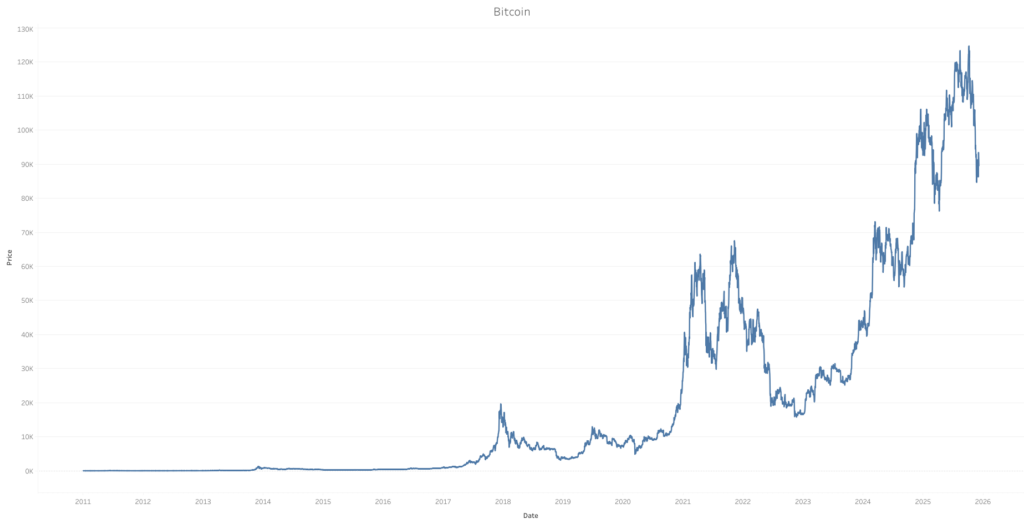
Crypto is a lot to digest; there is so much to consider. There is still so much we could cover, from cryptography dynamics to crypto market operations. For new investors, spending time learning the dynamics of cryptocurrencies & cryptocurrency markets will give them an edge in earning future returns. One of the main factors that impacts returns is volatility, and over time, the crypto market has proven itself profitable but volatile. Let’s take Bitcoin, for example, it’s up substantially since 2011, but has experienced price swings that aren’t for every investor.
The topics covered in this post are elements of the crypto market you want to have a good grasp of as you navigate the crypto market. Be sure to have a plan before investing and be prepared to adjust quickly, as market conditions can shift unexpectedly. The more prepared you are before entering the market, the better positioned you’ll be to handle volatility and capitalize on opportunities.
Web Sources
- The Motley Fool. “How to Mine Cryptocurrency.” https://www.fool.com/investing/stock-market/market-sectors/financials/cryptocurrency-stocks/how-to-mine/
- The Motley Fool. “The Basics of Blockchain Technology Explained in Plain English.” January 10, 2018. https://www.fool.com/investing/2018/01/10/the-basics-of-blockchain-technology-explained-in-p.aspx
- The Motley Fool. “Cryptocurrencies Explained in Plain English.” January 2, 2018. https://www.fool.com/investing/2018/01/02/cryptocurrencies-explained-in-plain-english.aspx
- The Motley Fool. “The Basics of Mined vs. Non-Mined Cryptocurrency Explained.” March 26, 2018. https://www.fool.com/investing/2018/03/26/the-basics-of-mined-vs-non-mined-cryptocurrency-ex.aspx
- Coinbase. “What Is Proof of Work or Proof of Stake?” https://www.coinbase.com/learn/crypto-basics/what-is-proof-of-work-or-proof-of-stake
- Investopedia. “Stablecoin.” https://www.investopedia.com/terms/s/stablecoin.asp
- Investopedia. “Hot Wallet.” https://www.investopedia.com/terms/h/hot-wallet.asp
- MoonPay. “Custodial vs Non-Custodial Wallets.” https://www.moonpay.com/learn/blockchain/custodial-vs-non-custodial-wallets
- Coinbase. “What Is a Hardware Wallet?” https://www.coinbase.com/learn/crypto-basics/what-is-a-hardware-wallet
- Ledger Academy. “What Is a Software Wallet?” https://www.ledger.com/academy/topics/security/what-is-a-software-wallet
Book Sources:
- Daskalakis, Nikos, and Panagiotis Georgitseas. An Introduction to Cryptocurrencies: The Crypto Market Ecosystem. Taylor & Francis Group, 2020. ProQuest Ebook Central.
- Lee, David Kuo Chuen, ed. Handbook of Digital Currency: Bitcoin, Innovation, Financial Instruments, and Big Data. Elsevier Science & Technology, 2015. ProQuest Ebook Central.
Discover more from
Subscribe to get the latest posts sent to your email.